
Portfolio — Show the Work Behind the Outcome
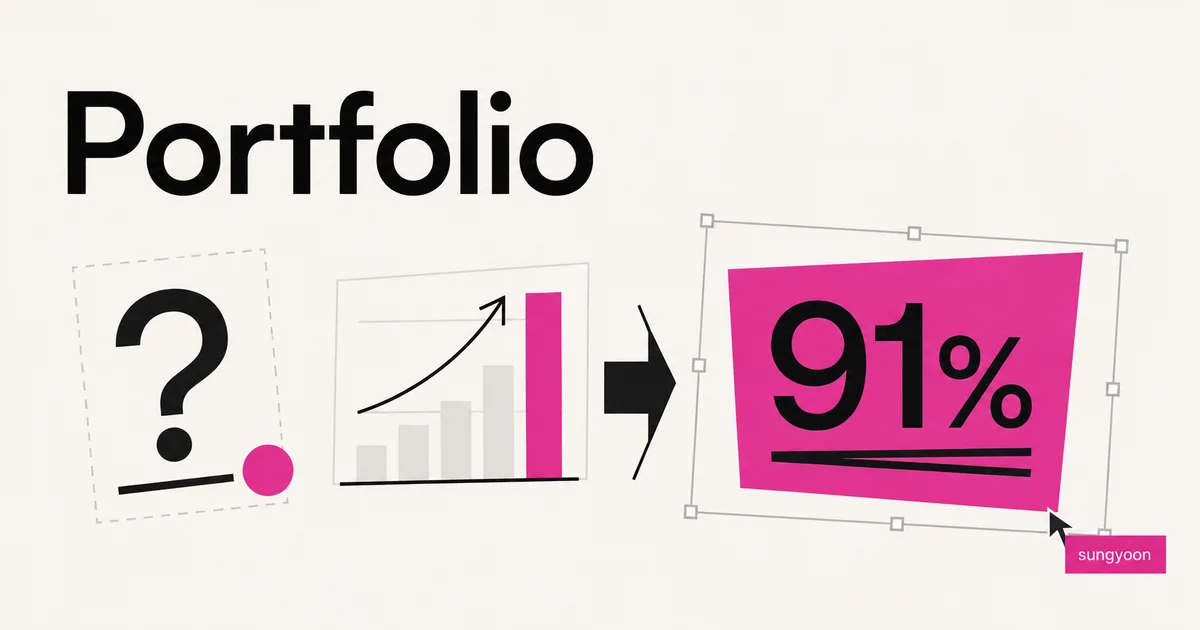
“I conducted user research and created wireframes.”
The statement may be true, but it does not show what the candidate learned or which decision they made. A portfolio reviewer wants to understand the judgment behind the final screen.
Snapdeck's Portfolio style turns project material into an evidence-led case study, not an activity list.
Read one project through five questions
Portfolio organizes the material around five questions.
- What problem or opportunity existed?
- What exactly did I own?
- Which research or evidence changed the direction?
- What did I decide and produce?
- What outcome or learning remained?
Each slide answers one of them. Instead of stopping at labels such as Research or Process, the title makes the change in judgment visible.
Do not inflate “what I did”
The fastest way to lose trust is to rewrite a team outcome as an individual achievement. The same is true when planned work becomes a shipped feature or an observed signal becomes an improvement rate.
Portfolio separates your role, decisions, and artifacts from the result the team produced together. It does not fill in employers, user counts, conversion lifts, revenue, or awards that are absent from the source.
When no quantitative result exists, it uses the decision enabled, learning confirmed, risk reduced, or next measurement instead of creating a fake KPI.
Treat artifacts as evidence, not decoration
Wireframes, PRDs, journey maps, campaign assets, and dashboards are not just attractive thumbnails. They are evidence that a decision became real work.
Portfolio favors one or two important artifacts shown at useful scale, with concise annotations connecting them to the problem and decision. When no image is available, it does not invent a product screen. It builds an honest placeholder from the artifact names and facts supplied.
Five variants, one standard
Portfolio includes five layout variants: editorial case studies, artifact-led pages, and process-to-decision flows among them.
The form can change, but the standard remains the same. A reviewer should be able to follow problem–role–evidence–decision–outcome in a short amount of time.
Start with the target role, project problem, your responsibility, the artifacts you produced, and the supported outcomes and limitations. The material does not need to be perfect. A strong portfolio shows the evidence available now and makes the remaining gaps clear instead of hiding them.